Geometric Line Border. Retro Decorative
A Clean, Confident Frame—Not Just Another Ornament
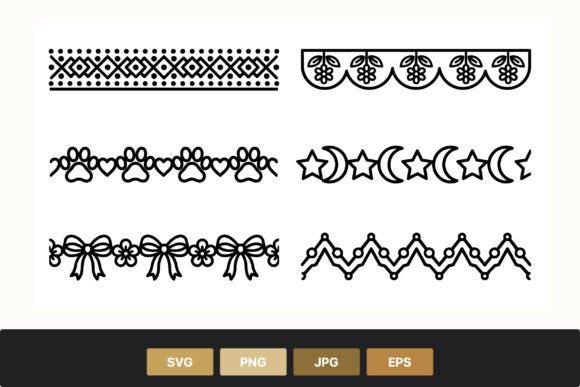
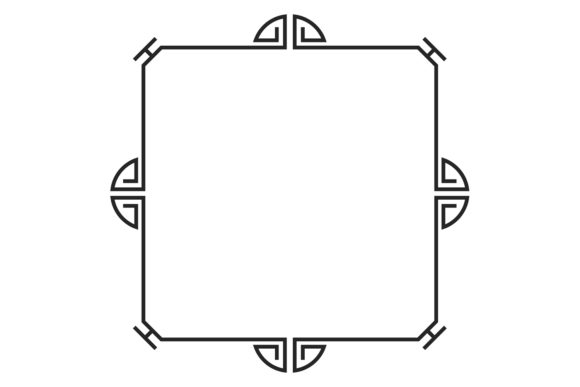
First glance at Geometric Line Border. Retro Decorative tells you it’s intentional—not fussy, not chaotic, but deliberately balanced. It reads as a single cohesive frame: sharp angles meet smooth curves, thin connecting lines echo mid-century modern sensibility, and the overall rhythm feels like a quiet hum rather than a shout. There’s no floral clutter, no dense fill work—just confident line work that breathes. As an embroidery designer who’s stitched hundreds of borders for client totes, baby blankets, and boutique aprons, I immediately saw its potential as a structural anchor—not a standalone motif, but a framing device that elevates whatever sits inside it.
Where It Shines: Real Projects, Real Fabric
I tested Geometric Line Border. Retro Decorative on a natural linen tea towel and a heavyweight cotton sweatshirt—two very different surfaces—and the result was consistent: clarity, legibility, and subtle sophistication. On the towel, it stitched cleanly with a simple running stitch outline (no fill), giving a hand-drawn, artisanal feel perfect for kitchen gifts or wedding favors. On the sweatshirt, I used a narrow satin stitch border with slight tapering at corners, and it held its shape without puckering—even over the shoulder seam. That’s rare for a geometric frame this precise.
It’s especially strong for products where presentation matters: embroidered patches for small shop merchandise, pillow covers for nursery decor, or personalized tote bags sold on Etsy. Because it’s isolated on white with transparent PNG support, it drops easily into mockups—no clipping masks needed. And because it’s built as clean vector art (EPS, SVG), scaling up for a large blanket border or down for a cap brim stays crisp. No pixelation, no jagged edges.
Where to Pause—Not Every Surface Is Equal
That said, Geometric Line Border. Retro Decorative isn’t magic. On highly textured fabrics—like bouclé knit or thick terry cloth—the fine interior lines can blur or disappear unless you adjust stitch density and stabilizer choice. I’d avoid using it full-size on baby onesies without simplifying the inner geometry first; tiny corners and tight angles don’t translate well on ultra-thin, stretchy fabric. Likewise, on dark fabric, make sure your thread color has enough contrast—this design relies on line definition, not tonal gradation.
For curved surfaces like caps or hats, test the topmost and bottommost sections separately. The symmetry is elegant, but curvature can distort corner alignment if hoop tension or digitizing isn’t optimized. And if you’re planning layered embroidery—say, stitching text *inside* the frame—verify spacing in your embroidery software first. Some versions of this design have tighter inner margins than others, and crowding kills readability.
What It Adds to Your Finished Product
This isn’t just decoration—it’s visual punctuation. When applied thoughtfully, Geometric Line Border. Retro Decorative signals intentionality. Customers notice it: “This feels designed, not slapped on.” That perception lifts perceived value, especially for handmade product listings on Etsy or craft fairs. It also supports brand consistency—if your shop leans minimalist, retro-modern, or Scandinavian-inspired, this frame reinforces that voice without needing custom lettering or logos.
For holiday embroidery or personalized gifts, it adds polish without overwhelming sentiment. A monogram inside the frame on a linen napkin? Elegant. A tiny embroidered baby name inside it on a cotton onesie? Thoughtful. A patch version sewn onto a denim jacket? Cool, collected, quietly confident.
Practical Designer Notes Before You Stitch
- Always test on scrap fabric first—especially if using it on textured, stretchy, or dark materials.
- Check thread color contrast early. This design lives or dies by line clarity—avoid low-contrast combos like charcoal gray on navy.
- Review stitch density. If your embroidery file uses heavy fill stitches in corners, reduce density slightly to prevent stiffness or thread breakage on lightweight fabrics.
- Confirm hoop size compatibility. While the vector files scale freely, your actual machine embroidery file may be pre-digitized for specific hoops—verify before hooping.
- Inspect small details at 200% zoom. Look for stray nodes, overlapping paths, or inconsistent line weights—these cause skipped stitches or uneven satin runs.
- Test black-and-white mockups. Since it’s often used as a neutral frame, ensure it reads clearly in grayscale for print-on-demand previews or social media thumbnails.
- Use appropriate stabilizer. Tear-away works for stable cottons; cut-away is safer for knits or lightweight linens.
- Verify licensing terms. As a digital embroidery file sold under Illustrations/Graphics, confirm whether commercial use—including finished embroidered goods or resale of digital assets—is permitted.
Final Thought: A Quiet Workhorse, Not a Flashy Trend
Geometric Line Border. Retro Decorative won’t go viral on Instagram—but it will earn repeat customers, show up in thoughtful gifting guides, and sit comfortably beside heirloom-quality handmade product photography. It’s the kind of design that makes your sweatshirt embroidery look professionally curated, your baby embroidery feel intentionally tender, and your Etsy shop feel cohesive—not because it shouts, but because it frames with quiet authority. Use it where you want people to pause, appreciate the detail, and trust the craft behind it.