Black Label Template: Graphics & Illustrations for Brand Elegance
As a graphic designer who’s built brand identities for handmade businesses, boutique skincare lines, and seasonal Etsy collections, I recently evaluated Black Label Template. Decorative Blank P for a client launching a limited-edition candle line with vintage apothecary vibes. My goal wasn’t just to find “a label”—it was to source a graphic design asset that could anchor the entire visual language: tactile, intentional, quietly luxurious.
First Impression: Mood Over Mechanics
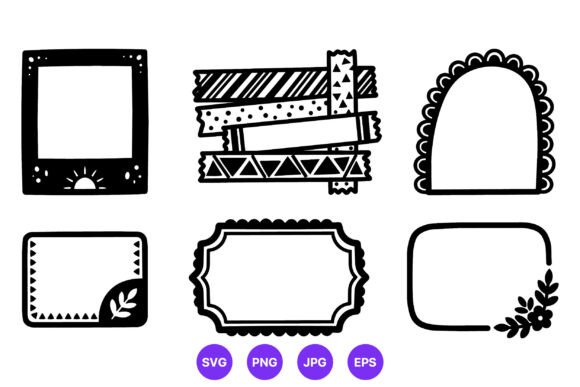
The moment I opened the preview, Black Label Template. Decorative Blank P landed with quiet confidence—not flashy, not fussy. It’s a clean, high-contrast decorative frame with subtle ornamental flourishes: tapered corners, delicate line weight variation, and an open central field that invites typography or minimal iconography. It reads as modern design with heritage sensibility—think mid-century packaging meets contemporary editorial illustration. It doesn’t shout; it sets tone. That makes it ideal for clients whose audience values craftsmanship over clutter: small business branding for ceramic studios, botanical tea brands, artisanal chocolate makers, or indie stationery labels.
Where It Shines in Real Client Work
In practice, Black Label Template. Decorative Blank P excels where visual breathing room and emotional resonance matter most:
- Product mockups and packaging design: Placed on a matte kraft box or glass apothecary bottle, it elevates perceived value instantly—especially when layered with a serif font or muted foil stamp effect.
- Social media graphics and Pinterest pins: Its strong silhouette and transparent PNG option make it perfect for overlaying product photos without losing clarity. I used it as a subtle border element in an Instagram carousel for a holiday campaign—no text competition, just refined framing.
- Printable design and Cricut projects: The SVG and EPS files scale flawlessly for vinyl cutting or sublimation design. For a local craft fair booth, we printed it on black cardstock, cut it with a Cricut, and mounted it behind hand-poured soy wax samples—clean, cohesive, tactile.
- Brand identity extensions: While not a logo itself, it functions beautifully as a supporting brand element—reappearing on thank-you cards, website banners, or even as a watermark on blog visuals. It reinforces consistency without repeating the logo verbatim.
- Editorial design and web design: Used sparingly as a decorative accent around feature quotes or ingredient lists, it adds rhythm and hierarchy without sacrificing readability.
Where Caution Is Required
This isn’t a universal utility asset—and that’s its strength. Black Label Template. Decorative Blank P should be used carefully in contexts demanding extreme minimalism or strict corporate neutrality. Avoid it in:
- Small-scale applications like favicon icons or app interface elements—fine details blur at under 48px.
- Crowded layouts (e.g., dense flyers or multi-product comparison grids) where its presence competes rather than complements.
- Low-contrast backgrounds (light gray, beige, soft pastels)—its elegance relies on contrast, so always test against your final background color.
- Projects anchored in ultra-clean sans serif systems (think tech SaaS or finance) unless intentionally juxtaposed for creative tension.
Design Judgment: Readability, Trust, and Emotional Payoff
What surprised me was how much Black Label Template. Decorative Blank P contributed to visual trust. In print-on-demand packaging, that subtle ornamentation signals care—it tells customers this isn’t mass-produced. When paired with thoughtful typography (I tested it with Playfair Display, Montserrat, and a restrained script), hierarchy remained clear: the blank center naturally draws attention to copy, while the frame subtly reinforces brand personality.
It also boosted audience engagement in social assets—not through novelty, but through familiarity rooted in quality. Followers commented on “that elegant little border” across multiple posts, confirming its role as a memorable, repeatable motif. That’s rare for a single illustration asset—it behaved more like a modular brand component.
Practical Designer Notes Before Client Use
Before clearing Black Label Template. Decorative Blank P for a real project, I ran these checks:
- Tested in grayscale: Confirmed all line weights hold up—no vanishing thin strokes.
- Checked transparency: The PNG renders true alpha transparency—no halo or compression artifacts on light/dark backgrounds.
- Previewed at scale: Verified vector integrity in Illustrator (EPS/SVG) and raster clarity in Photoshop (JPG/PNG) at both 300dpi print and 72dpi web sizes.
- Mockup validation: Dropped it into real product mockups (bottle, pouch, gift tag)—it didn’t overwhelm; it grounded.
- Font compatibility testing: Works with serif (for tradition), sans serif (for balance), and display fonts (for impact)—but avoid pairing with overly ornate scripts that fight its rhythm.
- Licensing verification: Confirmed commercial license covers client deliverables—including digital ads, Etsy product listings, and physical packaging. Always double-check the terms before using in a digital product or print-on-demand workflow.
Final Verdict: A Thoughtful Asset for Intentional Brands
Black Label Template. Decorative Blank P isn’t decorative filler—it’s a creative design decision. It supports storytelling, reinforces authenticity, and quietly communicates quality. For designers building small business branding, crafting printable design kits, or sourcing SVG design for Cricut users and crafters, it delivers professional polish without overcomplication. It fits seamlessly into design bundles, enhances marketing visuals, and stands apart from generic clipart or overused Canva templates. If your client values mood, texture, and intentionality—and you need a versatile, licensable graphic design asset that works across packaging design, social media graphics, and product mockups—this is one of those rare illustrations worth keeping in your core toolkit.