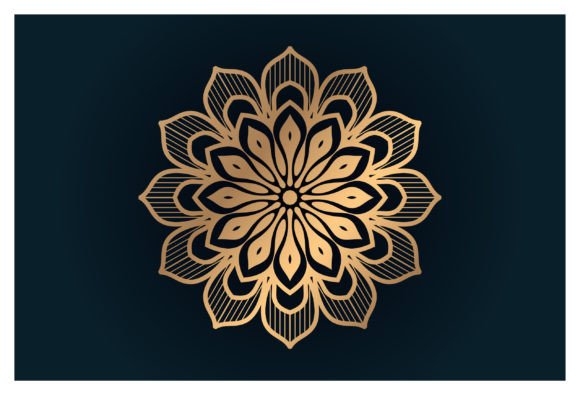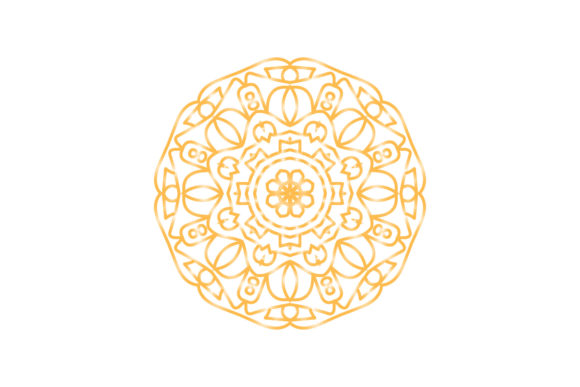
Arabic Decorative Circle Mandala
A Designer’s First Glance: Grace, Geometry, and Quiet Confidence
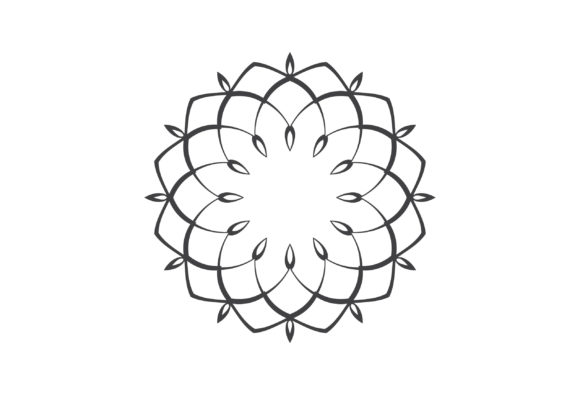
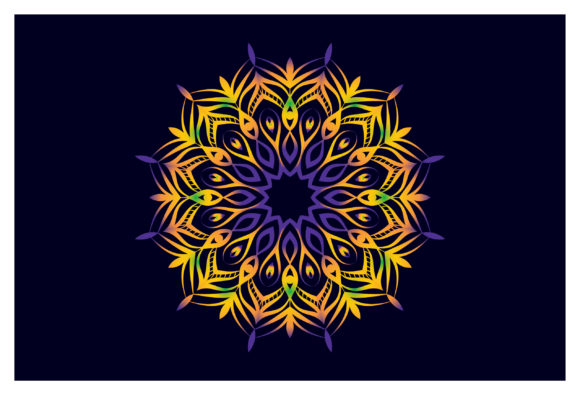
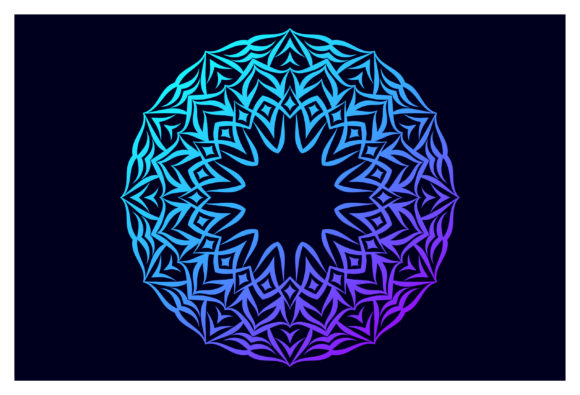
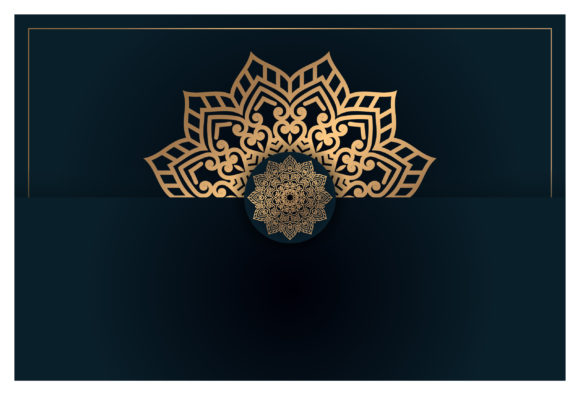
When I opened the Arabic Decorative Circle Mandala for the first time, what struck me wasn’t just its symmetry—it was its quiet authority. This isn’t a busy, overwrought pattern masquerading as cultural design. It breathes with balance: interlacing arabesques, subtle floral flourishes, and a central medallion that feels both ancient and effortlessly modern. The vector construction is clean—no stray anchor points, no overlapping paths—and the negative space is intentional, not accidental. That matters immensely when translating to embroidery. I immediately pictured it on a linen tea towel for a boutique kitchen line—not as a loud statement, but as a refined whisper of craft.
Real-World Test: Embroidering a Personalized Baby Onesie
Last week, I prepped the Arabic Decorative Circle Mandala for a custom baby onesie order—a neutral ivory organic cotton, delicate fabric, meant as a hospital welcome gift. Here’s how it held up:
- Stitch clarity stayed sharp even at 3.5 inches wide—the outer filigree read clearly without blurring or thread nesting.
- The concentric rings translated beautifully into satin stitch borders and soft fill stitch centers, giving depth without heaviness.
- Because the design avoids micro-detail (no 0.5mm tendrils or hair-thin linework), it didn’t require excessive digitizing cleanup—just smart underlay and moderate stitch density.
- It felt special without feeling “costume-y”—exactly what parents want for heirloom-style baby embroidery.
That experience confirmed something important: the Arabic Decorative Circle Mandala doesn’t shout. It invites closer looking. And in handmade product markets—from Etsy listings to local craft fairs—that kind of restrained elegance builds trust faster than flash.
Where It Shines (and Where to Pause)
This design naturally elevates products where intentionality matters: embroidered pillow covers for minimalist nurseries, silk-lined aprons for artisan bakers, monogrammed tote bags for boutique branding, or holiday ornaments stitched on wool-blend felt. Its circular format makes it ideal for center-placement applications—think sweatshirt chest logos, cap back emblems, or round patches sewn onto denim jackets.
But here’s where practical judgment kicks in:
- Avoid ultra-small hoops (under 4”): The inner geometry needs breathing room. Below 3 inches, fine linework risks loss of definition—especially on textured fabrics like terry cloth or bouclé.
- Test stabilizer choice carefully on stretchy knits: While the design itself isn’t dense, its continuous curves can torque lightweight jersey or ribbed cotton if hooping tension or backing isn’t dialed in.
- Dark fabric? Prioritize high-contrast thread: On charcoal or navy, pale gold or cream thread lifts the motif; black-on-black flattens its dimensionality. Always mock up in grayscale first.
- Curved surfaces (caps, curved pillow fronts) demand repositioning: The circle’s symmetry helps—but don’t assume automatic centering. Use a water-soluble stabilizer + light spray adhesive for secure placement.
More Than Just a Graphic—It’s a Brand Asset
As an illustrator who also consults with small creative businesses, I see how often designers overlook the *afterlife* of a design. The Arabic Decorative Circle Mandala works because it supports multiple layers of value:
- Visual appeal: Clean lines and cultural resonance attract attention without cliché.
- Stitching clarity: No hidden traps—no nested shapes that cause jump stitches or thread breaks.
- Product value lift: Customers perceive hand-finished pieces with this motif as thoughtfully curated, not mass-produced.
- Brand consistency: Whether used on a digital embroidery file preview, a printable mockup for your Etsy listing, or stitched onto a limited-run apron, it carries cohesive weight.
- Giftability: Its timeless tone makes it appropriate across ages and occasions—wedding gifts, Ramadan keepsakes, housewarming tokens, even corporate client appreciation items.
Five Must-Do Steps Before You Stitch
Even with a well-built vector like the Arabic Decorative Circle Mandala, skipping prep is the fastest route to rework. Here’s my non-negotiable checklist:
- Test on scrap fabric—same fiber content and weight as your final project. Watch for puckering, thread breakage, or distortion in curved areas.
- Check thread color contrast in natural light and under store lighting. A warm beige may vanish on oatmeal linen unless you boost saturation.
- Review stitch density in your embroidery software. If it’s over 18,000 stitches for a 4” version, consider simplifying outer rings for apparel use.
- Confirm hoop size compatibility before digitizing—some versions of this motif extend just beyond standard 5x7” boundaries.
- Verify licensing for commercial embroidery: Can you sell finished embroidered patches? Include it in a digital embroidery bundle? Resell as part of a craft kit? The product description says “Vector files. Openable, editable, and resizable without lo[ss]”—but usage rights aren’t stated. Always confirm before scaling for your craft business.
Final Thought: A Design That Respects the Hand and the Eye
The Arabic Decorative Circle Mandala isn’t flashy. It won’t dominate a social media feed with neon gradients or motion effects. But in the hands of an embroidery designer, small shop owner, or Etsy seller who values craftsmanship over clutter—it becomes quietly powerful. It reminds customers that care lives in the curve of a line, the spacing between motifs, and the confidence of restraint. Whether stitched onto a baby blanket, printed as a design asset for your next digital product launch, or adapted into an applique design for a custom tote bag, it holds space without demanding it. And in today’s saturated handmade market? That kind of grounded presence is rare—and worth every careful stitch.