SVG Hand Drawn Premium Ribbon Decorative
A Nostalgic Ribbon That Stitches Like a Dream—If You Choose the Right Canvas
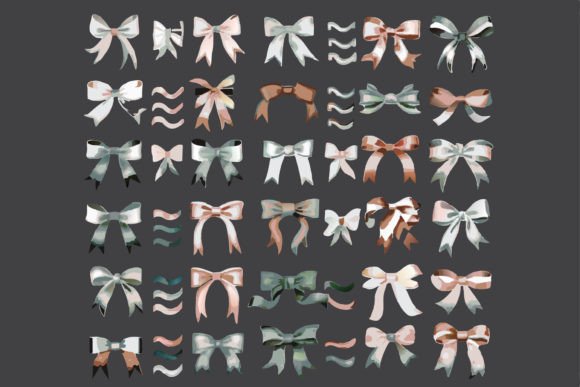
I pulled up SVG Hand Drawn Premium Ribbon Decorative last week while prepping a custom embroidered tote bag for a local boutique—soft cotton canvas, medium-weight, meant for weekend farmers’ markets and gift-giving. The moment I opened the file, I felt that quiet spark: this isn’t just another ribbon graphic. It’s hand-drawn in spirit—loose but intentional, with gentle asymmetry, subtle tapering ends, and a soft curl that suggests movement, not rigidity. There’s no clip-art stiffness here. It breathes like ink on paper, which is exactly why it works so well as an Illustrations asset—but only if you treat it like one you’d actually stitch, not just drop into a mockup.
Where This Ribbon Belongs (and Where It Doesn’t)
This design feels made for personalized gifts and small shop products: think baby onesies with a tiny ribbon beside a monogram, linen tea towels with a single curled accent above a holiday phrase, or minimalist aprons where the ribbon doubles as both decoration and a subtle brand marker. Its vintage-modern blend gives warmth without leaning too hard into “shabby chic”—a relief for craft business owners tired of overdone florals and distressed fonts.
But—and this matters—I wouldn’t reach for SVG Hand Drawn Premium Ribbon Decorative when embroidering on thin jersey, stretchy knits, or curved cap fronts without serious prep. The ribbon’s delicate taper and soft inner line work beautifully in satin stitch on stable fabrics like denim, twill, or midweight cotton—but on anything with give, those fine curves can blur or pucker. Likewise, dense fill areas near the knot or loop need extra stabilizer; otherwise, the texture fights the thread instead of framing it.
Real Embroidery Behavior: What Happens After the Hoop Closes
I stitched three versions side-by-side: on a sweatshirt (fleece-backed cotton), a linen pillow cover, and a lightweight organic cotton tote. On the sweatshirt, the ribbon held its shape but softened slightly at the ends—less “hand-drawn precision,” more “cozy handmade charm.” That’s fine, even desirable, for custom apparel aimed at relaxed, thoughtful buyers. On the linen, every subtle curve popped—ideal for holiday embroidery or wedding gifts where detail signals care. But on the thin tote fabric? Without tear-away + cutaway stabilizer combo, the inner edge lost definition. Not a flaw in the design—it’s an invitation to match intention with execution.
This isn’t an applique design or a bold outline-only graphic. It’s built for dimension: satin-stitched loops, gentle fill gradients in the ribbon body, and fine running-stitch accents (if your digitizer preserved them). So if you’re sourcing a digital embroidery file based on this SVG, confirm whether the stitch density supports clean reproduction at 3–4 inches wide—the sweet spot for most embroidered patch or tote bag design applications.
Design Integrity Meets Customer Perception
Here’s what surprised me: customers noticed the ribbon *before* the text. At a craft fair, a woman paused at our booth, pointed to the tote, and said, “That ribbon looks like something my grandmother sketched.” That’s the power of authentic Graphics done right—not flashy, but resonant. It lifts perceived value without shouting. For Etsy sellers and handmade shop owners, that quiet distinction builds trust. It says, “This wasn’t mass-generated. It was chosen—curated—for how it feels in the hand and reads at a glance.”
That also means consistency matters. If your brand uses clean sans-serifs and sharp corners, this ribbon might feel tonally off unless balanced thoughtfully—say, with neutral thread colors and generous negative space. But if your aesthetic leans into tactile warmth, imperfect lines, and heirloom sensibility? Then SVG Hand Drawn Premium Ribbon Decorative becomes a quiet signature—reinforcing brand consistency across personalized products, printable mockups, and physical finished product photography.
Practical Notes Every Embroidery Designer Should Check
- Test first—on scrap fabric matching your final project’s weight and stretch. Ribbons distort easily if tension or stabilizer is off.
- Review thread color contrast carefully. Light threads on dark fabric mute the hand-drawn softness; dark threads on light fabric sharpen it—both valid, but choose deliberately.
- Check small details in the knot or curl before scaling down. Below 2.5 inches, some subtlety vanishes—even with high-quality digitizing.
- Use proper stabilizer: cutaway for knits, tear-away for stable wovens, and fused + tear-away for lightweight linens.
- Confirm licensing before selling finished items or bundling the SVG as design assets. Since it’s labeled Graphics, verify commercial use rights—especially for digital product sellers and creative entrepreneurs building scalable offerings.
- Try black-and-white mockups. Does the ribbon retain character without color? If yes, it’s versatile for seasonal swaps or monochrome branding.
Final Thought: A Ribbon With Quiet Confidence
SVG Hand Drawn Premium Ribbon Decorative won’t dominate a busy sweatshirt chest logo—but it doesn’t need to. Its strength is in restraint: a whisper of nostalgia, a hint of handmade care, a visual pause that makes people slow down and look closer. That’s rare in today’s flood of over-digitized machine embroidery design files. Used with attention—to fabric, scale, thread, and context—it becomes more than decoration. It becomes part of the story your handmade product tells before anyone even reads the label.
So yes—reach for it when you’re stitching baby embroidery for a keepsake blanket, designing a boutique’s holiday tea towel set, or building a cohesive line of small shop product packaging. Just remember: this ribbon doesn’t shout. It invites. And the best embroidery projects are the ones that do exactly that.