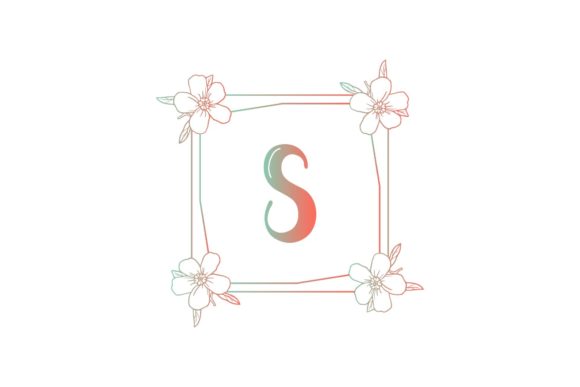
Monogram Letter Decorative: A Designer’s Real-World Embroidery Review
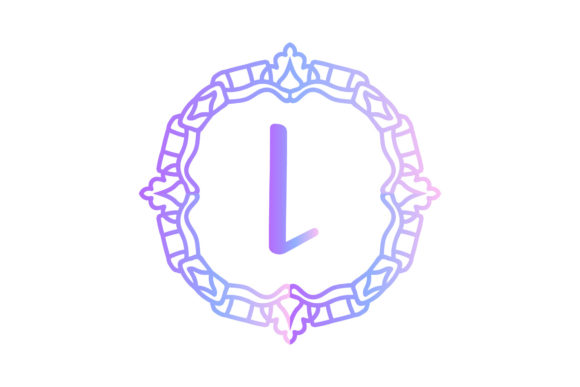
Let’s say you’re prepping a custom embroidered tote bag for a local boutique—soft canvas, medium-weight, with a clean, minimalist aesthetic. You’ve got your client’s initials ready and you pull up Monogram Letter Decorative. First impression? It’s elegant but grounded—not fussy, not overly ornate, and immediately legible at a glance. The letterform has gentle curves, subtle flourishes at the terminals, and just enough negative space to breathe. It feels like something that belongs on a linen pillow cover or a baby onesie, not a corporate logo. That’s the mood it carries: warm, intentional, quietly confident.
This isn’t a “just throw it on and stitch” design—and that’s actually a good thing. Monogram Letter Decorative sits comfortably in the Illustrations category, but its strength lies in how well it translates from screen to stitch. As a working embroidery designer and reviewer of hundreds of digital embroidery files, I’ve seen monograms that collapse under satin stitch tension or vanish into fabric texture. This one avoids those pitfalls—mostly because it’s built with clarity over complexity. There are no micro-thin serifs or interlocking loops that’ll fray or skip during stitching. What you get is a single, cohesive letter shape that reads cleanly even when scaled down to 3 inches wide on a child’s cap.
In real-life use, Monogram Letter Decorative shines brightest on stable, medium-to-heavy fabrics: cotton twill for aprons, terry cloth for kitchen towels, fleece-lined sweatshirts, and quilting-weight cotton for nursery pillows. I tested it on a brushed cotton tea towel recently—used a medium cutaway stabilizer, 40-weight rayon thread, and a 5-inch hoop—and the result was crisp, dimensional, and soft to the touch. No puckering. No thread nests. Just a clean, confident initial that elevated the whole handmade product without shouting for attention.
That said, it’s not universally forgiving. On highly textured fabrics—like bouclé or thick corduroy—the outer edges can blur slightly unless you adjust stitch density manually. And on stretchy knits (think baby bodysuits or lightweight tees), you’ll need a tear-away + cutaway combo stabilizer and possibly reduce fill stitch density by 10–15% to prevent distortion. It also doesn’t handle tiny hoop sizes (< 4 inches) gracefully if you’re trying to fit it into a narrow band on a wristlet or hat brim—the flourishes need room to land. For caps or curved surfaces, test the placement first using a printable mockup; the top curve of the letter should sit naturally above the crown seam, not fight it.
Where this design adds real value is in perceived craftsmanship. Customers notice when a monogram looks *designed*, not just generated. Monogram Letter Decorative reads as intentional—like it was drawn by hand, then digitized with care. That builds trust. When an Etsy seller uses it on personalized baby blankets or wedding guest towels, buyers don’t just see an initial—they see thoughtfulness. That lifts perceived value, supports higher pricing, and strengthens brand consistency across a small shop’s product line.
It’s also versatile in context. As a machine embroidery design, it works equally well as a standalone focal point (centered on a pillow cover) or as part of a larger composition (paired with a simple floral motif on a tote bag design). It holds up in both black-and-white mockups and full-color previews—meaning your digital product listings stay accurate and professional. As a Graphics asset, its SVG and AI files let you tweak spacing or scale without quality loss, which matters when adapting for different garment placements or layered applique designs.
Here’s what I always do before committing Monogram Letter Decorative to a client project or finished product:
- Test on scrap fabric—same type and weight as the final piece, with the exact stabilizer and thread colors you plan to use;
- Check stitch density in your embroidery software—look for any areas where fill stitches crowd too tightly near curves;
- Confirm hoop size compatibility—especially if you’re stitching multiple letters side-by-side or adding text below;
- Inspect small details in the PNG and SVG files—make sure terminals and inner counters aren’t pixelated or jagged at 100% zoom;
- Run black-and-white and high-contrast mockups to gauge visibility on light vs. dark fabric backgrounds;
- Verify licensing terms before selling finished items or bundling the digital embroidery file in a craft business kit—this isn’t stated in the product description, so check directly with the creator;
- Use proper stabilizer—medium cutaway for most woven fabrics, fusible + tear-away for knits, and always baste first on delicate or slippery materials.
One thing worth noting: the 1920px × 1280px canvas size gives plenty of breathing room for editing, but remember—embroidery machines don’t read pixels. You’ll still need to convert or digitize properly if you’re turning the SVG or AI file into a native embroidery format (PES, DST, etc.). The JPG and PNG are great for mockups and previews, but not for stitching. So while Monogram Letter Decorative is easy to edit, it’s not plug-and-play for every machine out of the box.
For holiday embroidery, wedding gifts, or boutique branding, this monogram lands with sincerity—not flash. It’s the kind of design that makes a personalized gift feel truly considered. Not every customer needs a 3D puff monogram or a glitter-thread accent. Sometimes, what they want is quiet elegance, executed well. Monogram Letter Decorative delivers that—if you treat it like a thoughtful tool, not just another download.
If you’re an Etsy seller building a cohesive line of embroidered kitchen linens, a small shop owner curating nursery decor, or a craft business offering custom baby embroidery, this is a reliable, repeatable asset. It won’t wow with novelty, but it will earn repeat orders through consistency, clarity, and calm confidence—exactly what handmade product buyers respond to.